The vineyard
9 grape varieties
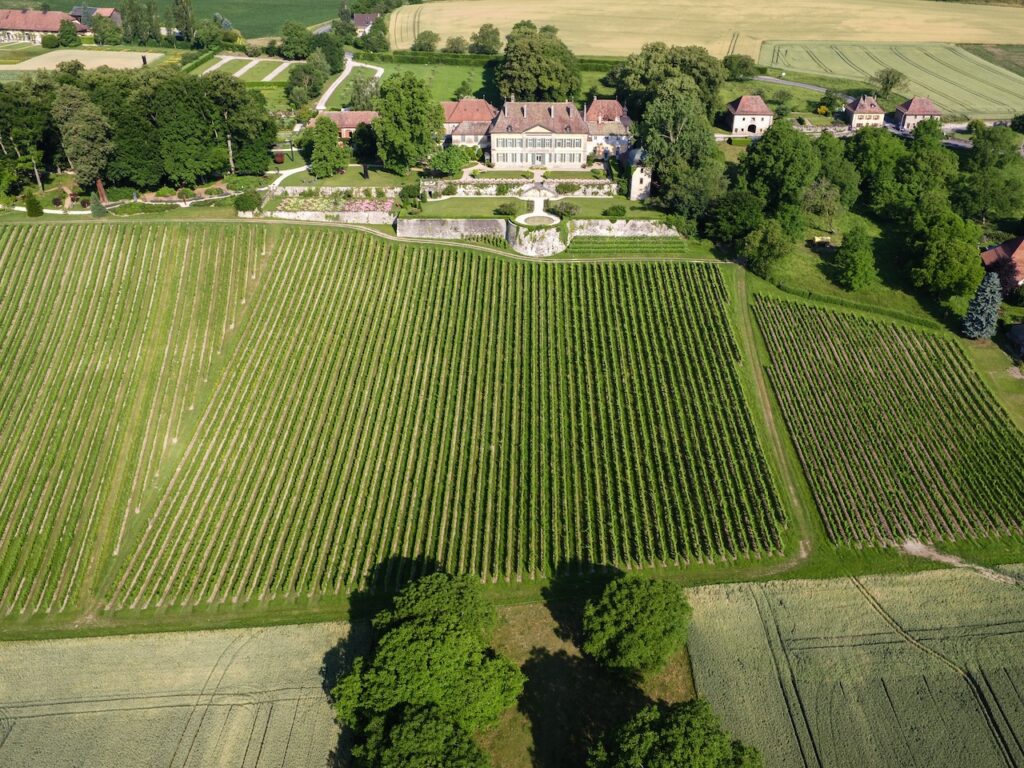
7 hectares of organic vineyards in the heart of the Château
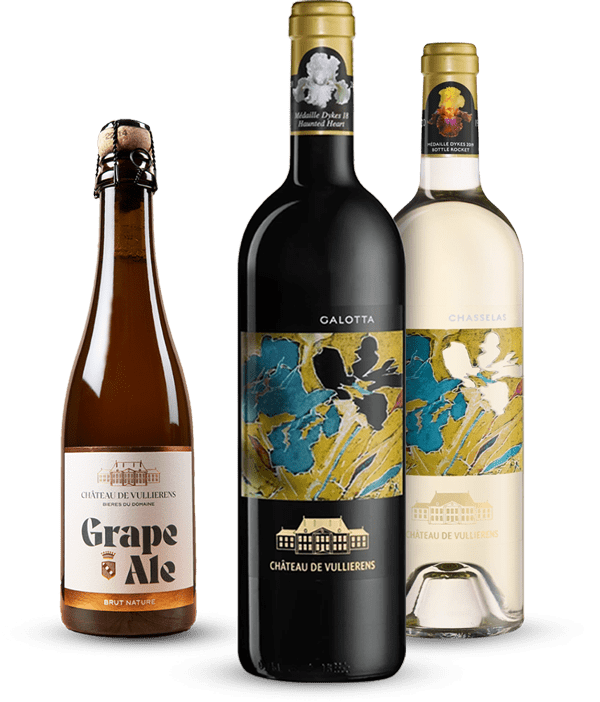
6 organic wines & 1 beer
Rare and complementary grape varieties
Arbane
A rare and ancient white grape variety originating in Champagne, where it is still used in the Champagne AOC. Arbane brings freshness and subtle floral and citrus aromas. Planted in 2020, it is used in both of our Bruts.
Chasselas
A white grape variety typical of the Lake Geneva region, closely linked to Switzerland’s wine-growing heritage. Chasselas is light and fruity, appealing for its smoothness and beautiful minerality. In addition to the wine that bears its name, it is used at Château de Vullierens in original creations such as Grape Ale beer and alcohol-free brut.
Chardonnay
A globally recognized white grape variety, it expresses itself elegantly in the terroirs of Vaud. Its aromas of white flowers, yellow fruits, and hazelnut are found in our two brut wines.
Pinot Meunier
A red grape variety from the Pinot family, it is recognizable by its leaves, which appear to be dusted with flour, hence its name. Low in tannins, this rare grape variety in the canton of Vaud is found in both of our Bruts.
Petit Meslier
An ancient white grape variety from Champagne, now very rare. Known for its acidity, Petit Meslier embodies our desire to explore lesser-known grape varieties and is part of our approach to viticultural biodiversity. This grape variety is used in both of our brut wines.
Pinot Noir
An iconic red grape variety in Switzerland, Pinot Noir produces supple, aromatic wines with notes of red fruit, undergrowth, and sweet spices. Pinot Noir embodies the elegance of a great classic.
Gamaret
Created in Switzerland in the 1970s, Gamaret is a red grape variety, a cross between Gamay and Reichensteiner, designed to be disease-resistant. Gamaret seduces with its aromas of black fruits, spices, and violets. On the palate, it combines structure, roundness, and freshness, with supple tannins and a beautiful length. At Château de Vullierens, it is used as a single varietal and blended with Garanoir in the Rosé.
Garanoir
A cross between Gamay and Reichensteiner, like its cousin Gamaret, Garanoir is a red grape variety that was developed in Switzerland in the 1970s. Less tannic and more supple, it appeals for its accessibility and aromatic elegance. At Château de Vullierens, it is used as a single variety and blended with Garanoir in the Rosé.
Galotta
Galotta is a relatively recent Swiss red grape variety (1981). It is a cross between Ancellotta (an Italian grape variety from Emilia-Romagna) and Gamay (a grape variety from Beaujolais). Its color is almost black thanks to the Ancellotta, with present but rounded tannins and aromas of black fruits accompanied by spicy notes. Galotta is sometimes nicknamed the “little Swiss Syrah.”